Taste Over Price: Assessing a Wine's True Value for Gifting

Choosing a holiday gift often means finding a compromise between budget and the desire to impress. Professional tasting assessment helps reveal a wine's true potential beyond its price tag. By mastering a few simple analysis rules, you can easily find wines that taste far more expensive than they cost.

What is Value Assessment in Wine Tasting?

The ability to correlate shelf price with quality in the glass is a practical skill that protects you from marketing gimmicks.

The Concept of Value in the Glass

Value assessment in tasting is an analytical method where an expert evaluates a wine's balance, complexity, and depth without looking at the label. In blind tastings, this approach reveals hidden gems that match recognized icons in quality but cost a fraction of the price. For consumers, this skill becomes the ultimate tool when choosing Christmas gifts, when you want to present a memorable gastronomic experience rather than just a bottle.

To determine if a wine tastes more expensive than its price tag, sommeliers look for markers of complexity and oak integration, which typically require costly ageing. If an affordable wine displays subtle tertiary aromas of leather, tobacco, or forest floor instead of simple, straightforward fruit, its value rises sharply. Understanding these nuances allows you to avoid overpaying for famous appellations like Rioja DOCa or Ribera del Duero DO, finding outstanding examples in less hyped regions.

Four Pillars of Gift Value

01

Structural Balance

Balanced acidity, alcohol, and tannins with no rough edges.

Structural Balance
02

Aromatic Complexity

A layered bouquet revealing new nuances with every swirl.

Aromatic Complexity
03

Length of Finish

A long, evolving taste sensation after the swallow.

Length of Finish
04

Food Friendliness

The ability to complement festive dishes rather than clash.

Food Friendliness

Texture and Tannins as Status Markers

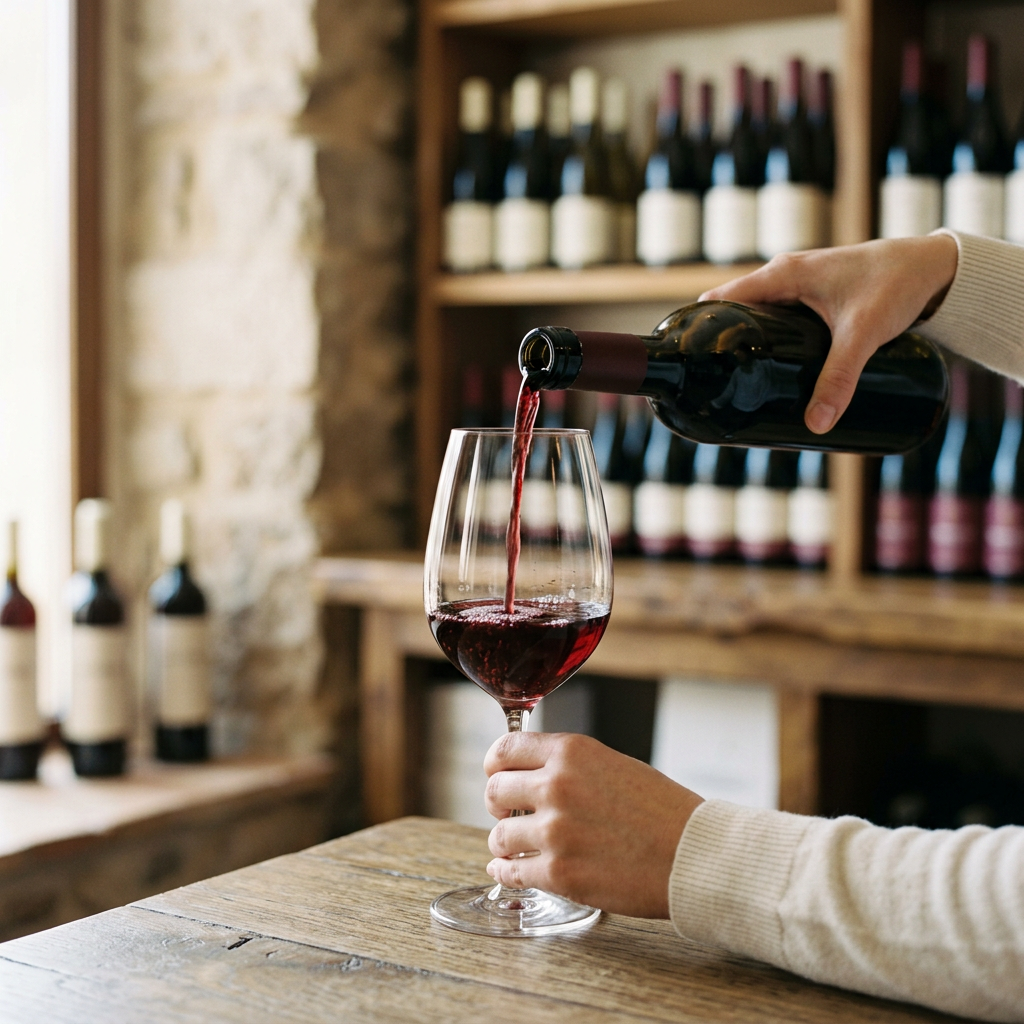
When choosing a full-bodied red wine as a gift, texture is key. In inexpensive releases, tannins often feel rustic and drying. Conversely, a hallmark of a fine aged wine is silky, fine-grained tannins that gently coat the palate. This velvety texture is achieved through slow micro-oxygenation during oak ageing.

Depth of flavor is closely linked to the concentration of dry extract in the grape, which depends on vine age and yield control. In the glass, such wine opens up gradually, showing a dense body and volume. It is this sensation of weight and smoothness on the tongue that creates the subjective impression of an expensive gift.

To find this balance across different price points, look for wines made from Tempranillo or Cabernet Sauvignon labeled Reserva. For a more modest budget, wines from Jumilla DO based on Monastrell or aged Garnacha from Campo de Borja DO offer excellent alternatives. In these, a dense texture is often achieved through the warmth of the southern sun and old vines.

Alternative Styles: From Bubbles to Fortifieds

Dry red wine is a classic, but the festive table demands variety, opening up new gifting opportunities.

Sparkling Wines: The Magic of Perlage

The quality of a sparkling wine is easily determined by its perlage—the play of bubbles. In cheap examples, they are large, short-lived, and aggressive on the palate. High-quality Cava, produced using the traditional method, features tiny, continuous streams of bubbles that gently tingle the tongue.

Extended ageing on the lees (Reserva and Gran Reserva categories) enriches the wine with notes of brioche and toasted nuts. These autolytic notes are the primary sign of noble origin. When choosing a gift, look for the Cava de Guarda Superior category on the label.

Acidity balance is another crucial factor. High-quality sparkling wine leaves a sensation of freshness and purity, stimulating the appetite before dinner. Avoid examples with cloying sweetness, which often masks defects in the base grapes.

White Wines: Structure and Acidity

Great white wines can surprise just as much as reds. The main quality marker here is a crisp yet integrated acidity that holds the wine's structure. In gift-worthy white wines, a full body achieved through lees ageing (sur lie) or delicate oak use is highly valued.

Albariño from Rías Baixas DO combines piercing freshness with a dense, almost oily texture. When evaluating, look for mineral nuances: salinity, wet stone, chalk. These nuances make the aroma intriguing and reveal a noble origin.

For a weightier style, aged Godello wines or classic white Rioja are ideal. In these, the woody notes of vanilla should not overpower the fruit, but rather frame it gently, creating a sense of multi-layered complexity.

Fortified Wines: The Nobility of Sweetness and Oxidation

Sherries (Jerez-Xérès-Sherry DO) possess immense gifting potential. In dry styles like Oloroso or Amontillado, value is defined by the complexity of oxidative development. Notes of walnut, dried fruits, and spices create an incredibly deep bouquet that evolves in the glass for hours.

For sweet styles, such as Pedro Ximénez, the key quality criterion is the balance between sweetness and acidity. Cheap sweet wines often feel cloying, whereas a great Sherry retains a savory freshness and an endless finish with notes of fig and dark chocolate.

The gifting value of Sherries is enhanced by the unique "solera and criaderas" ageing system. Wines of the VOS and VORS categories (aged over 20 and 30 years) represent liquid history. This makes them a prestigious gift for the sophisticated collector.

A Practical Guide to Choosing Wine as a Gift

A checklist for evaluating wines across different price tiers during a pre-holiday tasting.

Budget up to €15: Varietal Purity

In this category, avoid wines with complex oak ageing, as high-quality oak is expensive. Look for clean, varietal wines with a bright fruit profile and good acidity. Young wines made from Garnacha, Mencia, or Sauvignon Blanc are excellent choices.

Budget up to €30: Regional Character

At this level, you can expect a pronounced terroir character and careful ageing. Look for wines from the subzones of Rioja Alavesa or Ribera del Duero. A marker of quality is the balance between fruit ripeness and subtle spicy nuances from high-quality French oak.

Budget up to €50: Complexity and Structure

In this segment, the wine should possess ageing potential and a complex structure. Evaluate the density of tannins in red wines and the depth of autolysis in sparkling wines. Look for single-vineyard wines or prestigious releases from family-owned bodegas in Priorat DOQ or Bierzo DO.

Premium from €50: Collectible Value

For top-tier wines, an impeccable winery reputation, an outstanding vintage, and high critical acclaim are essential. On tasting, such a wine should impress with its balance: even in its youth, all elements must be integrated, promising beautiful development over decades.

Looking for the Perfect Holiday Gift?

At the Solo Wine boutique in Marbella, we have curated an exclusive collection of wines that have passed rigorous expert selection. Book a place at our Christmas tasting to personally evaluate the finest examples under the guidance of a professional sommelier and make the perfect choice for your loved ones.

Learn more
Home
Favorites
Catalog
Cart
Log in